This blog post is about immigrants and the economy. There are focuses on policy within the United States that directly and indirectly effect working immigrants. Additionally, there is an analysis of what immigrants contribute to our country and how they are seen through the average American.
The Immigrant Role in the United States
Blog post four to a four part series within the topic of immigration and economics. ENGL 1102
Lorena Sanchez-Gallastegui
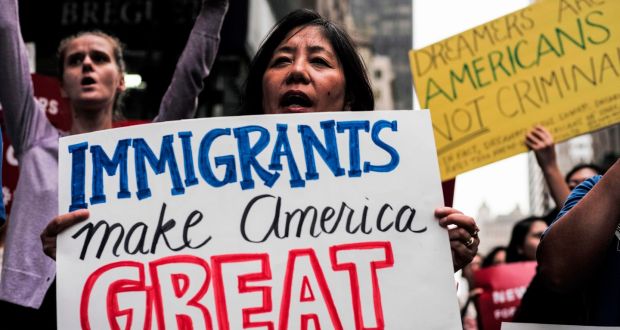
We live in a country that can be described as a melting pot of nationalities, cultures and motivations alike. We support one another, whether we know it or not. We the people are the ones who make the country, the county is not what makes us people. Thus the issue of immigration. There are immigrants in our country involved in the ‘we’ and many factors to consider despite the stereotypes against them.
In 2015 Donald Trump, referring to immigrants, voiced his belief that “They are taking our jobs. They are taking our manufacturing jobs. They are taking our money. They are killing us.” This belief was the flame to the policies he proposed in a campaign holding the promise to “Make America Great Again” such as improvement of border control with an increase in border patrol agents, the construction of a wall on the US-Mexico border and a call for stricter deportation policy. Immigrants have negative connotations of harming rather than helping whether it be the economy, the job market or American opportunity as a whole, many take a divisive stance on whether or not immigrants are ‘good’ or ‘bad’ when in reality is a much more complicated issue.
In the last few years, the country has seen and increase of power in U.S Immigrations and Customs Enforcement with raids and deportations being an almost daily occurrence. As ‘unlawful’ as a person’s presence may be, the abrupt removal of them is not the answer as it disrupts their place of work and effects profits. Postville, Iowa saw a raid in 2008 and resulted in the disappearance of a multinational economy that was in the process of emerging. The closing of one Agriprocessor plant cause major profit loss to Midwestern livestock supplies and shrank the city population to half its ‘pre-raid size’ which in turn forced many small town businesses to close their doors. It’s a chain reaction that could either be positive or negative. Not only are economies effected but a strain is places on home life.
A country that insists on instilling traditional values of family and a mother and father is the same country ripping families apart. Here is where there lie the secrets behind immigrant detention centers which are effectively prisons for those awaiting trial to avoid deportation in which the family unit is separated. There is no logical reasoning behind these places, only the justification that it is “more like a summer camp” and the promise by Trump and his administration that there is “24-7 access to food and water”, “basketball courts” and “exercise classes.” However, footage from within these facilities have shown people in fences that bare similarity to cages and of children sleeping on the floor on thin mats, with shock blankets or with nothing at all. Human beings are being subjected to extensive physical and emotional trauma and the country has gone silent, or are kept in the dark.
Is it really stealing jobs if no one is willing to do them? A large portion of undocumented immigrants in the United States are doing the ‘unpleasant, back breaking jobs that native born workers are not willing to do’ (brookings.edu). This compilation of unappealing jobs includes the thousands of agricultural jobs involving picking vegetation, day in and day out, sun rise to sun set, every day, simply to make ends meet. For 14 hours a day, 6 days a week you too can earn only $11 k a year with no benefits or overtime pay! In a country that is constantly pushing for more employee benefits, better worker conditions and significant increase of the minimum wage, hardly any native-born American would want these jobs. The general native-born work force feels less impact than the portion of the work force that is low skilled due to the increase in competition among new immigrants, prior immigrants and high school dropouts. Thus concluding that it is not stealing jobs but rather coming behind and picking up the low skill work many Americans are unwilling to do for the low pay.
According to a 2013 report by George Borjas, the United States had an influx of one million immigrants per year. Such numbers have increased annually to prove time and time again that the US is a hub for a ‘better future’ and the ‘American Dream’. It is because of this that a portion of our economy can always be contributed to the foreigners who come to work or start businesses. After all, one third of the entrepreneurs and investors in the United States are immigrants. The disappearance of such a large inflow of money and business would create a large gap in the economy that could not be easily fixed with solely American workers or new economic policy. Realistically, the demand of work can not be met as the native-born population continually decreases while the age of workers increases, a shortage of labor could be on the horizon without the help of immigrant workers.
There are not as many negative effects by immigrants as stereotypes deem them to be. They are not ‘stealing’ jobs but picking up slack. They are not ‘killing us’ as much as they are helping us build and further an economy. They are people too and we need to start treating them as our people.
Immigration Reform: Societal and Economical Effects
Blog post three to a four part series within the topic of immigration and economics. ENGL 1102
Lorena Sanchez-Gallastegui
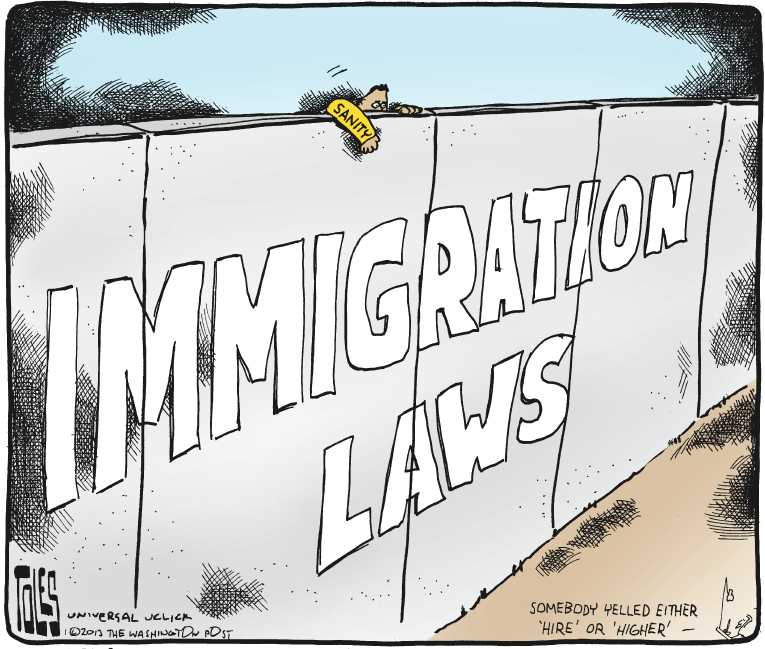
Immigrants have always held a significant contribution to the United States economy, today as political candidates address the issue of immigration policy; we pay more and more attention to those people and how they are affecting our own jobs and economic prosperity. An increase in efforts to legalize the millions living undocumented could create opportunity for not only the individual but for the economy and the native-born workers around them.
In today’s political climate, the topic of immigration is one that is commonly discussed. Whether the conversation be about policies surrounding the process of acquiring a green card, a visa or citizenship or whether it be about the immigrants themselves and what they are contributing to the country as a whole; Americans commonly take a bipartisan stance with little knowledge or consideration for individual situations. Most recently, we witnessed Donald Trump’s presidential campaign where he promised to “Make America Great Again”. In 2015, Trump voiced his belief that immigrants are ‘taking our jobs’, ‘taking our manufacturing jobs’, taking our money’ and ‘killing us’. All of these beliefs were the motivation behind his ‘proposed policies’ of building a wall on the US-Mexico border, enact stricter deportation policies and have more border patrol agents. Frankly, immigrants, in President Trump’s eyes, are negatively affecting the job market and effectively harming American opportunities.
In the 2017 Current Population Survey(CPS), we find that 27% of the country’s 321.1 million people are immigrants or first-generation US born children to immigrant parents. In 2016 alone 1.49 million immigrants entered the United States or ‘foreign born individuals’ as Jie Zong, Jeanne Batalova and Jeffery Haddock refer to them in “Frequently Requested Statistics on Immigrants and Immigration in the United States”. Surprisingly, the leading country of origin was India, not Mexico as we have all been led to believe by mainstream media. However, Mexican immigrants as a whole make up 26% of the immigrant populations. Additionally, Mexico is the leading country of origin of illegal ‘aliens’ entering the United States; a nation with an estimated 12.1 million undocumented peoples living within its borders.
Illegal ‘aliens’ is a term given to those who have entered the country undocumented, meaning they did not have a visa to enter the country and are not lawfully residing within the country; other terms may include unauthorized immigrant, illegal immigrant or undocumented worker. They work and contribute to the American economy and American society. After all, ‘college graduates are more prevalent among recent immigrant adults than among all adults in 90 of the 100 largest metropolitan areas’ according to William Frey, Senior Brookings Fellow. Their children go to school alongside American children. Some have family and some are by themselves. With such variety and so many different situations, it seems wrong to marginalize all of these people into one narrow idea of the ‘illegal immigrant’ without the consideration of individual factors.
As an attempt to legalization, President Obama’s administration created the Deferred Action for Childhood Arrivals (DACA) program in 2012. This program granted protection from deportation and gave legal work authorization to individuals who ‘came to the United States as children, have pursued an education and neither pose a national security threat nor have committed serious crimes’(Hipsman,Meissner). In the time between the past presidency and current the economy saw growth in the GDP as high as 5.1% due to increases in innovation, workforce and investment. However, the program came under fire when Donald Trump took office and is now under review.
In 1986, The United States legalized a ‘significant percentage of the undocumented population’ with the Immigration Reform and Control Act (IRCA) of 1986. Throughout the years, researchers have found that IRCA provided ‘unexpected indirect benefits’ to the communities of legalized immigrants. For example, Hugo Ortega, who became the owner of a top restaurant in Houston, created jobs and hired U.S workers within his community with the restaurant.
According to Brookings Senior Fellow Dany Bahar, immigrants represent 15% of the general American workforce but account for approximately a quarter of entrepreneurs within the US and a quarter of investors in the US. This is effectively a positive link between immigration and economic growth thus rendering President Trump’s quick judgment counterproductive to an economy in which he is a knowledgeable billionaire. Although there is the argument of immigrants negatively impacting native-born workers, Bahar argues that the negative impacts ‘occur for the most part on wages of prior immigrants with similar skillsets’.
Enforcement of immigration laws could be costlier than legalization. The burden of covering the costs that federal funding cannot falls on the local taxpayers as it happened in Harris County, Texas in February of 2017 when their agreement with ICE ended due to the biweekly $1 million in overtime costs they were paying for increased enforcement. Other places such as Alamance County, who is considering rejoining the Delegation of Immigration Program (278(g)), has built a $12 million jail expansion to ‘accommodate for the growth’ as a The Hill article stated. And these are just economic statistics, the social costs become greater. In a survey within Davidson County, Tennessee, a former ‘partner’ of the 287(g) program, it was found that 54% of Latinos did not report crime and 73% cooperated with police with apprehension. There is an unspoken human right to feel protected, to have a safe environment where we can thrive as human beings however, the world around us is doing a poor job of upholding that.
There are far too many too ignore and far too many possibilities to dismiss the issue. The costs will outweigh the benefits in the sense that by making efforts to legalize the undocumented people who are bettering our country, who are working in our fields and bettering society with increased education rates. Legalization will provide them with opportunities that could potentially create opportunities for the American people and further more the possibility of expanding the economy with investment and innovation that may have never otherwise reached the market.
(IMAGE)
H1-B Visas
Blog post two to a four part series within the topic of immigration and economics. ENGL 1102
Lorena Sanchez-Gallastegui
As you grow up, you work hard and you go to school for a great portion of your life with the hope that you’ll find what is considered a ‘good’ job. You might even get a Master’s degree so as to better your chances but upon leaving school you realize your home country is newly industrialized and there are no jobs asking for your qualifications. But you’re not about to waste your efforts so you move, more specifically to the United States with an H1-B Visa.
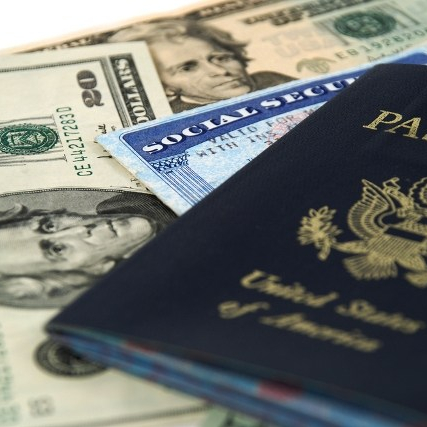
The H1-B visa system is the largest active guest worker visa program that operates on the basis of filling high-skilled gaps in the American work force with foreigners. Each visa is granted through ‘an employer-driven system’, meaning that in order for the government to grant the visa it must first be petitioned for by an employer. Before petition by the employer however, comes the process of applicants finding an employer to petition for their visa. According to their education level, applicants will fall under either the regular H1B quota of 65,000 or the Master’s degree quota of an additional 20,000. Another category that may apply to applicants from Chile and Singapore is a 6,800 visa quota as part of the Free Trade Agreement. So 6,800 spots are available for citizens of Chile and Singapore, 20,000 spots for those with Master’s degrees and 65,00 for the rest of the applicant populous. Everyone of them has to find an employer willing to hire them and undergo the lengthy petition process. Initial filing fees vary from $1,575 to $2,325 rates just for the act of petitioning, not including additional attorney fees which may be critical to the applicant. In the petition by the employer, the company must include the position and its exact duties, strict dates of employment for the visa, detailed description of the applicant and what the company will require from them, salary offered and contact information. This is only the first step.
Wages of the H1-B worker as defined in the initial report by the employer will then be discussed and confirmed by the State Security Agency. In doing this, the State Security Agency is ensuring that the foreign worker will not be working below minimum wage of the state in which they will be employed. Wages must also not be considered excessive as that imbalance would be rendered as the employer taking away from other ‘similarly employed’ American employees. Failing to do so could create grounds for a lawsuit from the applicant as it could be considered worker exploitation and would put not only the company they are working for in trouble but government agencies as well.
Once the terms of employment are defined exactly and wages have been discussed and approved, the employer must prove that hiring the H1-B worker at hand will not ‘adversely affect the wages and working conditions’ of US workers within the company or firm. In summarization, the elements of this provision include assurance that the applicant and existing employees are treated and paid equally regardless of their different situations. This must all be properly documented and included on a labor condition application (LCA) which will serve as physical proof to the government. Additionally, all existing workers of the firm must be informed of the intention to hire and H1-B worker. There will be no misunderstandings between employer and employee this way as the transaction is made entirely transparent to the employees and will assuredly not be disruptive to them.
After all of the work by the employer and the applicant has been completed, the petition must be prepared and filed at the proper United States Citizenship and Immigration Services (UCIS) office. Processing times are lengthy despite whether or not you expedite your petition, approval takes time. Of the thousands who apply for the Regular H1B, only 33-48% will be approved. More promising is the 75-86% of approval for those who hold more advanced degrees such as Masters or Doctorates. After this step, it is all in the hands of the US government.
Executive Order 13788 has put this policy under ‘scrutiny’ as it ‘directs federal agencies to review whether existing policies adequately prioritize American products and protect American workers’. Such scrutiny creates the perfect opportunity to refine the system so as to please all parties involved. In a Forbes article about the topic, the proposition of California Representative Zoe Lufgren is defined as a ‘type of auction mechanism’ where the company that bids highest will receive preference in filling high skilled gaps within their company. So as to not discredit startups, there would be several H1-B Visa spots set aside for them.
Prosperity becomes a possibility when ensuring that American firms are globally competitive. This feat can be achieved through programs, such as that of the H1-B visas, that take into account global perspectives to create something new, something innovative, and something American in its roots in the sense that it harbors a relentless spirit and strives for improvement.
Executive Order 13788
Blog post one to a four part series within the topic of immigration and economics. ENGL 1102
Lorena Sanchez-Gallastegui
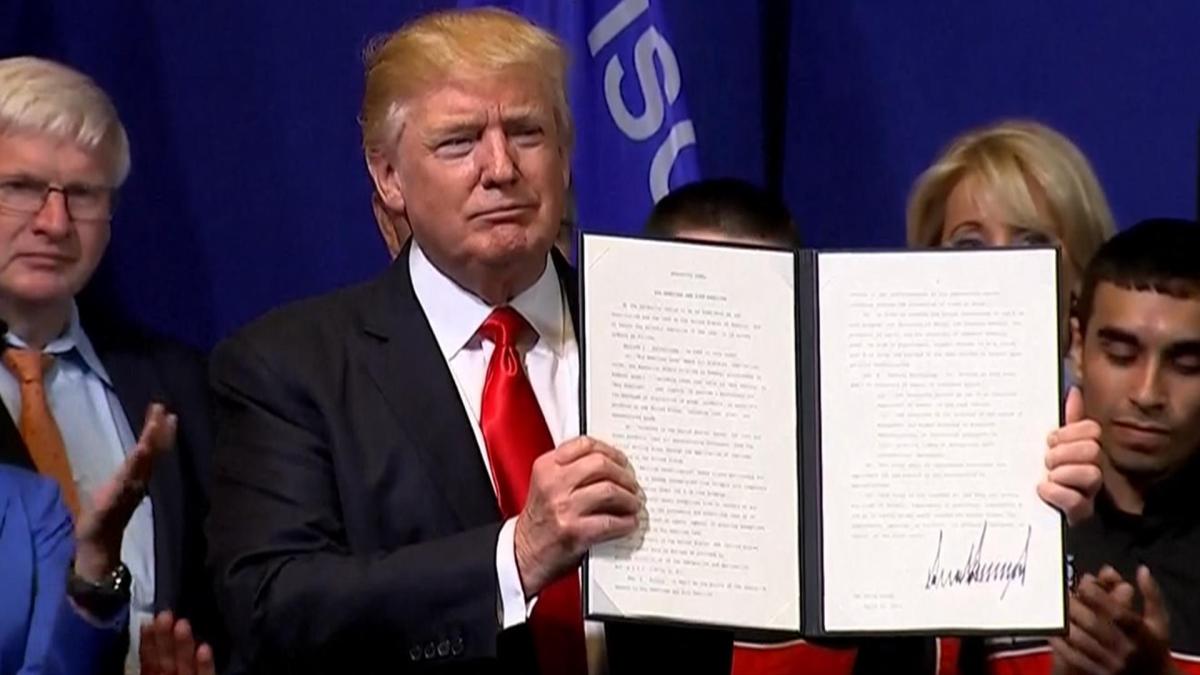
Executive Order (EO) 13788, otherwise called the “Buy American, Hire American” executive order, was signed by President Trump on April 18th, 2017. His goals with this ordinance were to foster prosperity for the American worker and to provide support for American manufacturing companies.
In reference to the “Buy American” portion of the executive order, Trump intends to implement a set of laws restricting ‘how good and manufactured products are obtained and how they’re used in federal projects or federally funded projects’. (NAFSA) In other words, this Executive Order is a “Buy American Law”. Like other rules and regulations falling into this category, the EO references the requirement or preference for goods, products and materials such as iron and steel to be produced in the United States in exchange for federal money or in federal projects. Besides the exchange between what goes on before production, this section of the EO more specifically targets the term ‘produced in the United States’. In terms of iron and steel products, this means all manufacturing process involved in creating the final product happened in the United States. From melting to coating, for the product to be considered ‘produced in the United States’ all processes need to have occurred in the United States. Suppose the state of Georgia wanted to build a bridge, this new ordinance will effect the product and said process substantially. The bridge would have to be built with American steel in order for the federal government to fund it thus stimulating the economy before said bridge was even built.
In retrospect, the ‘Buy American’ ordinance of EO 13788 would ‘stimulate’ economic growth and ‘promote’ national security of the United States. (whitehouse.gov) By solely relying on the resources provided by American manufacturing companies, the economy is supporting itself from within. Idealistically, the American economy would be weaning itself off dependency of other countries goods and services. However, because of the decrease in foreign competition, prices of resources could substantially increase within the US. Under the concept of monopolistic competition, American producers of iron and steel would find themselves with more power over the distribution of manufactured metals than they had before. This would give the firms the ability to raise prices amongst themselves whereas before, they had a wider platform for competition and had to take into account more firms so as to not affect the quantity demanded of their product. Additionally, the lack of trade between foreign countries could hurt international relations with decreasing trade and the exponential increase of taxes. With a decrease in flow of goods between countries, other imported goods would become more expensive or become more heavily taxed due to the shortcoming that the EO would cause.
People are often turned away from jobs because they are not qualified enough. Now companies are turning people away, not because they are under-qualified in their prospective skills, but because they are not American and therefore do not qualify. The ‘Hire American’ part of Executive Order 13788 is based upon creating ‘prosperity’ among the ‘blue collars’ of America by creating new jobs and decreasing the unemployment problem among Americans. For years the debate of whether or not immigrants are ‘stealing American jobs’ has raged on without the consideration that perhaps said immigrants are more qualified to do the job at question. On the more negative side of business, sometimes firms will use this program for cheaper labor and partake in practices that are considered ‘discriminatory’ to American workers as defined by the US Department of Justice. With the explicit statutes as defined by the EO, out sourcing becomes more difficult for firms and therefore their production costs may increase. Protecting against the business practices that advocate for cheaper labor rather than American prosperity, there is the anti-discrimination provision of the Immigration and Nationality Act which prohibits the discrimination of American workers in the process of hiring, firing or recruiting.
Many times, working people come to the US on an H1-B Visa which is a working program that requires petition by the employer, extensive qualification of the employee and acceptance of the government before the visa is given. This process, as discussed in another blog post, is difficult enough as it is. However, with the EO calling for a significant decrease in available visas, the application process suddenly becomes that much more competitive. More barriers are being put in place to prevent larger corporations from using cheaper labor but there are a few specialty job positions which may be forced to consider weaker candidates due to said barriers.
Executive Order 13788 is beneficial in terms of redefining the use of the H1-B Visa program by employers to avoid fraud and abuse of the program in the hiring process of companies. However, it may leave some high skill and specialty spots with less qualified people if a better candidate is a foreigner with a denied visa. The ‘Buy American’ part of the EO will hurt individual companies and international relationships as it will increase production costs, tariffs and decrease trade with other nations. On another hand, it may give American iron and steel manufacturing companies more business and therefore benefit to the American economy. Overall, the Executive Order can do as much harm as it can benefit and only time will tell whether the new policies will contribute to “American prosperity” as described in an NBC newscast in relation to the EO.
 Immigration and Economics